
A few weeks ago I attended my son’s curriculum night and one teacher was talking about using methods from The Harvard School of Education’s Project Zero and Agency by Design to develop teaching methods that engaged students in non-traditional ways. A lot of these methods applied to brainstorming methods and so I slid those web sites into my back pocket for later use.
Then a couple days ago, Quipsologies posted a link about this new MIT micro site that generates random projects for you to tackle and the brainstorm bug bit me again.

The MIT site is an excellent example of one of the most powerful brainstorming tools. If you remove the words in color you are left with a powerful fill-in-the-blanks tools to generate off the wall and never before heard of experiential solutions.
All of this reminded me of the structured brainstorm tools that Mickey McManus and Marc Petersen taught me before they moved on to form Maya (another great source for design thinking through the Luma Institute). For example, ask your team to spend 15 minutes design a theme park ride based on “X”. “X” being a client demo, brand, message, or whatever describes the design problem you want to tackle. Is the ride fast or slow? Dark or light? What’s the path? What are the high points? What are the beginning, the middle, and the end?
Project Zero’s section on Tools is full of brainstorming tips in the form of thinking routines.
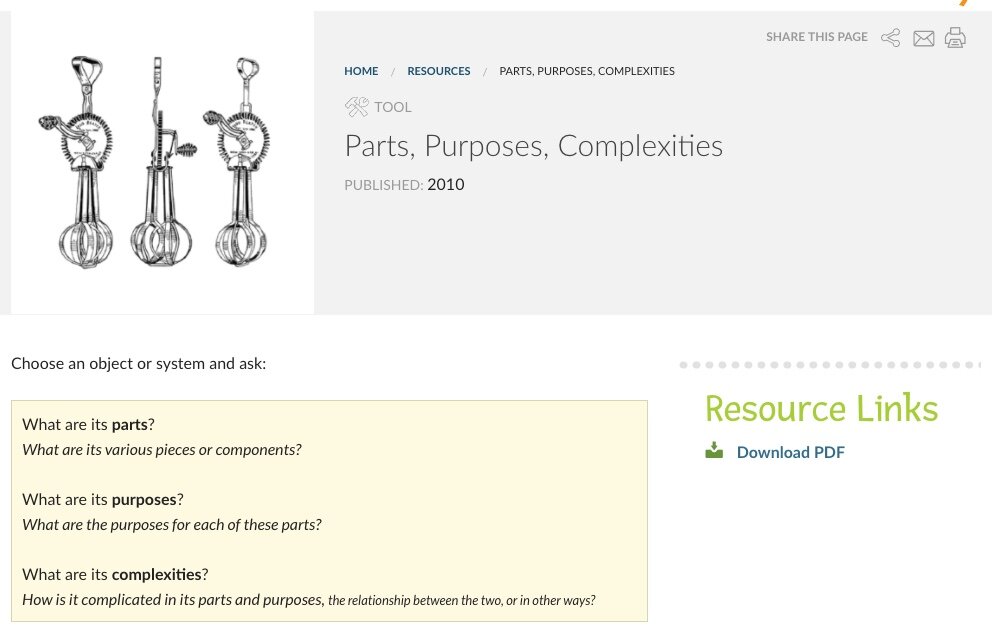
Likewise, Agency by Design has a nice array of Thinking Routines based around maker practices.

These thinking routines are tools that help make your thinking visual. They force you to extract the complex steps that you use to form an idea and commit them to paper.
The point here is to reframe the problem away from your personal experiences (or the client’s personal experiences) and to ask the broader questions. Depending on the tool, you can verify the problem at hand or find new solutions to the problem.
Most of the content is available as downloadable PDFs that include a description of the tool, instructions and sample applications. I am going to grab all these tools and then set up a brainstorm for our next project and start to try out these tools.
To get a full rundown of many brainstorming basics, check out this FastCoDesign article and then pick the tools above that best work with the mission of your brainstorm.
Another great resource is IDEOU which provides some paid online courses to teach design thinking.
The point of brainstorming is to push the envelope and move into uncharted territories, but the brainstorm is not a free for all. It has to have some structure and these tools are excellent starting points to let the team know what the exercise will be and how it will stimulate new thinking. Once the tools and parameters are established, then let everyone open their minds and you’ll be astounded by what comes out.
 Experiential Ideas