

A new article on FastCoDesign, The Reason Your Brain Loves Wide Design, outlines the results of a study that shows that wide products exude strength and dominance if they have a discernible “face,” including cars, clocks, and watches.
“If something looks like it has eyes, nose, or a mouth, people automatically process that as if it’s a human face. For any product with those features, our brain can’t help but process it as a human face. We’re also really good at catching these cues as they relate to dominance–[seeing] that this person is probably stronger than I am.”
Maeng goes on to describe that humans have evolved to be scared of these dominant faces and that fear encourages us to buy them to boost one’s feeling of dominance.
“In some situations, people leverage the [wide] product, which looks dominant, to compensate their lack of dominance. [It] boosts their feelings of power or dominance.”


In terms of experiential marketing, the point is clear. If you want to invite people into an event then you might want to steer clear of forms with a wide face. But, another FastCoDesign article, Why Our Brains Love Curvy Architecture, from 2013 discusses a study that shows people’s preference for curved forms and architecture.
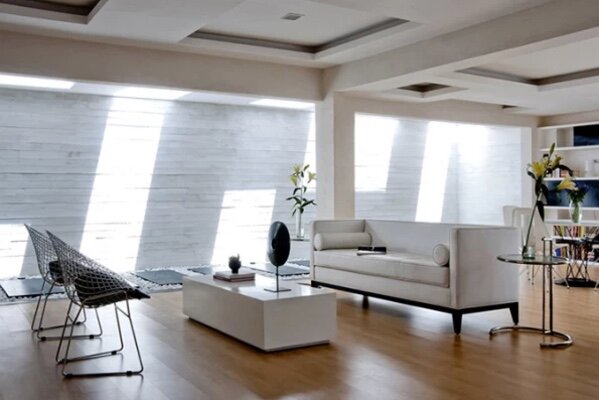

It seems that the brain is hard wired to find these curved forms more “beautiful”. When shown the forms, the study measured brain activity and the area of the brain that was activated by curved forms was the anterior cingulate cortex which is responsible for emotion. Sharp angular forms, however, activated the amygdala. the part of the brain that processes fear.
“In other words, we prefer curves because they signal lack of threat, i.e. safety.”
The takeaway here is an important one. Often when working with a client, they will say they don’t like certain forms, but they can’t put their finger on why they dislike it even if the forms echo the brand. It’s important to keep these studies in mind to help separate personal emotion reaction from the much more relevant brand personality story.
Many brands use color and form to set themselves apart and attract the risk-taking active audience. In those cases, the client may dislike the angular forms and opt for something more curved and inviting, but that would do a discredit to the brand message. The feelings evoked by the sharp angular font, graphics, and architecture are being used to support the brand and evoke and emotional response from the audience.
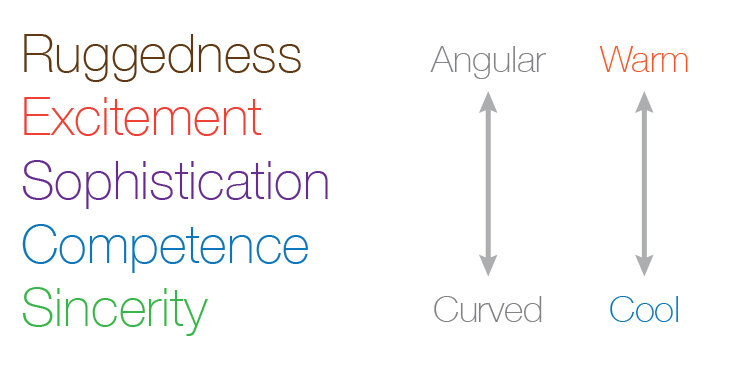
Finally, we must keep in mind that there are only five main brand categories and that colors, forms, fonts, and written copy for those different categories also vary from warm, earthy and angular (Rugged and Excitement) to cool, curved and friendly (Sincerity and Competence). Next time you are in a client meeting discussing likes and dislikes, be sure to frame the conversation to avoid personal preference and stick to the brand personality.
 Experiential Ideas