
Two articles in FastCoDesign and the crowd-sourcing of design may be hinting at the future of design. There have been a lot of arguments over how crowd-sourcing sites like Fivrr and 99Designs will change the design landscape. In addition, tools like Squarespace and The Grid are starting to change the landscape for web designers. But on the flip side, stock sites like The Noun Project and Creative Cloud Stock allow you to share content or grab content without even leaving the application!

Now, a tool developed at Airbnb called Lottie creates an open source UI design tool with content in a single location (it leverages The Noun Project). FastCoDesign’s story this week The Airbnb Tool That’s Changing UI Design dives into all of Lottie’s details while a second story, Have Designers Lost Control Of Design? discusses how user testing has now devolved into endless (and possibly daily and live) A/B testing that moves design decisions out of the hands of designers and into the hands of algorithms. The Grid web design and layout tool does much the same by using data to change the layout of your site based on incoming data.
“The gap between what the designer creates and what the people who use it actually touch has gotten really big.”
A/B testing, the ability to add apps to a variety of devices and the SDKs behind them (that provide anyone with the “design tool kit”) have turned a whole host of people into designers. Recently, the term “product designer” has shifted from a person who designs physical products into a term for app designer. Suddenly, apps are products. Tools that used to be for video editing suites and multi-media designers are now used to develop YouTube content not for design aesthetic, but purely to drive an ad based revenue stream. FastCoDesign goes as far as to say, “Engagement becomes the chief metric, and just because something holds someone’s attention doesn’t mean it’s good for the user”.
Webb argues that as design has taken a seat in the C-suite, it brought about an unintended consequence. Design is quickly becoming more about business results, optimization and efficiency than human emotion, connection and usability. The FactCoDesign article closes with some powerful questions about what a designer’s true responsibility is in this new economy.
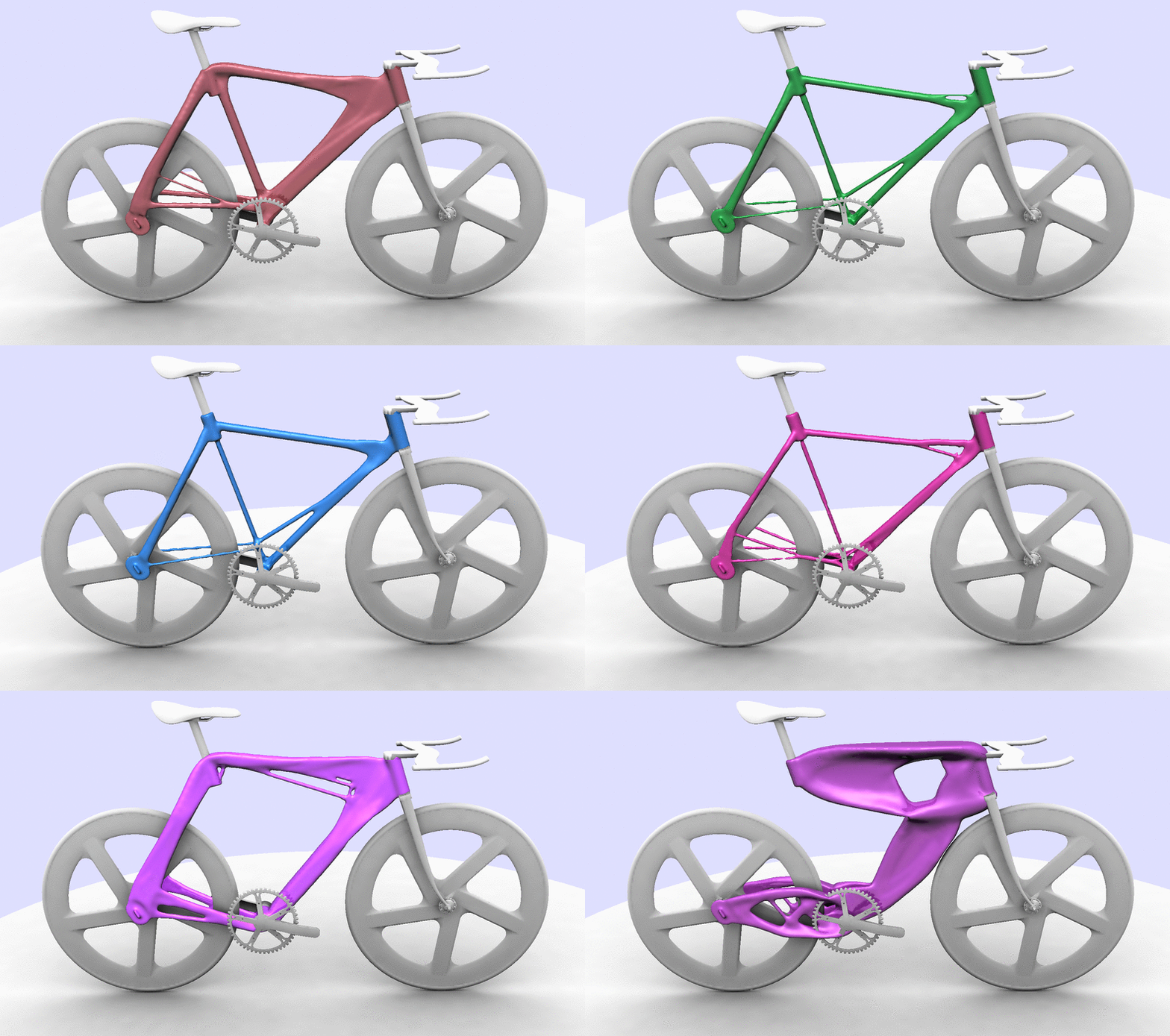
There is some incredibility powerful relevance here for face-to-face experiences as decision makers start to measure their relevance through tweets, likes, and media coverage. Will experiential design (or design in general) become more about minute by minute optimization? And how will design change as Autodesk and other software companies apply artificial intelligence to the engineering and design side of the equation? There are apps that can now simulate many painterly styles to turn your photos (and even videos) into works of art, and algorithms to take a series of design constraints and use them to iterate hundreds of design options in seconds.
But earlier this year, Smashing Magazine’s Yury Vetrov rebuts a lot of this by discussing that designers still have to take the wheel and make many of the decisions that AI can’t make.
Hopefully, Mr. Vetrov is correct and the changing landscape that these apps and algorithms provide are just additional tools in the designer’s toolbox. He notes we are just in the infancy of AI, and human designers will still be needed to make the emotional, rational and gut reactions for a long time to come. But don’t ignore the trends. Instead, stay on top of them to help your designs and skills stay relevant as the term “designer” evolves.
 Experiential Ideas