
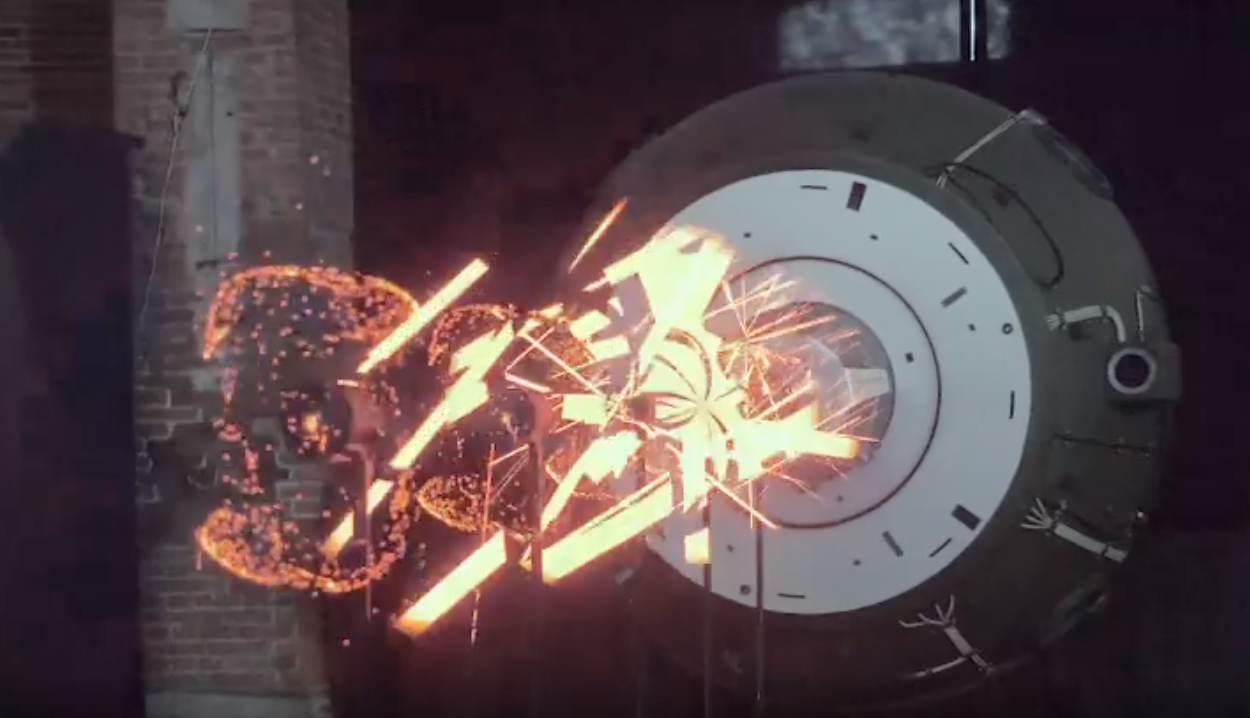

Those little LED fans you used to receive as swag, the ones that spun around and revealed a company name, they have a big brother. Typically called a 3D holographic display, around .5m diameter, these fans spin as they play video content by spitting out the right pixels in the right locations during rotation.


Usually we’ve just seen them used alone to allow a video of an object or text to float in space, but some inventive digital designers have kicked it up a notch. We are Tundra has used them to create some really great installations. By placing the fans at different depths, they have created the illusion of content moving through space from fan to fan.
Tundra’s understanding of the transparency created by black portions in the video feed (similar to how an OLED screen can appear transparent) opens up the door to layered content. I’ve seen these float in front of other content, like a tagline and the fan video traces the tagline or makes it pulse. But in Tundra’s case, they layered it with another LED holographic fan (well, multiple holographic fans).
Check out this making of video for Signals For Space
I also saw one on LinkedIn, but can’t seem to find the source. It overlaps several fans ever so slightly to remove the gap between them. This eliminates the perceived circular format and allows multiple fans to create what seems like a transparent rectangular screen.
Some nicer fans have four blades, where most of the commercial versions are only two blades.
Both of these digital artists are using these products in innovative ways and leveraging some of the inherent limitations of the product. Next time you are stuck on a design, try some reframing to turn your roadblock into an advantage.
 Experiential Ideas
Leave a comment