

“I’m all lost in the supermarket
— The Clash
I can no longer shop happily
I came in here for that special offer
A guaranteed personality.”
Joe Strummer and Mick Jones penned those words in the late 1970s, but they feel just as relevant today. We’re surrounded by choice, yet somehow more uncertain about what it all means (and whether it is even real). In the Transformation Economy, consumers enter the metaphorical supermarket, or the digital one, searching not just for products, but for purpose.
It’s been over 25 years since Pine and Gilmore published The Experience Economy, and towards the end of that book, they hinted at what’s next, the Transformation Economy. Jospeh Pine’s book, The Transformation Economy comes out in early 2026, so it is safe to say the Transformation Economy is here.
And in that new economic model, consumers aren’t buying brands. They’re buying flourishing, the promise of transformation. And that shift is redefining businesses and brands. Through the lens of The Clash’s supermarket, let’s look at how brands can participate in the Transformation Economy.
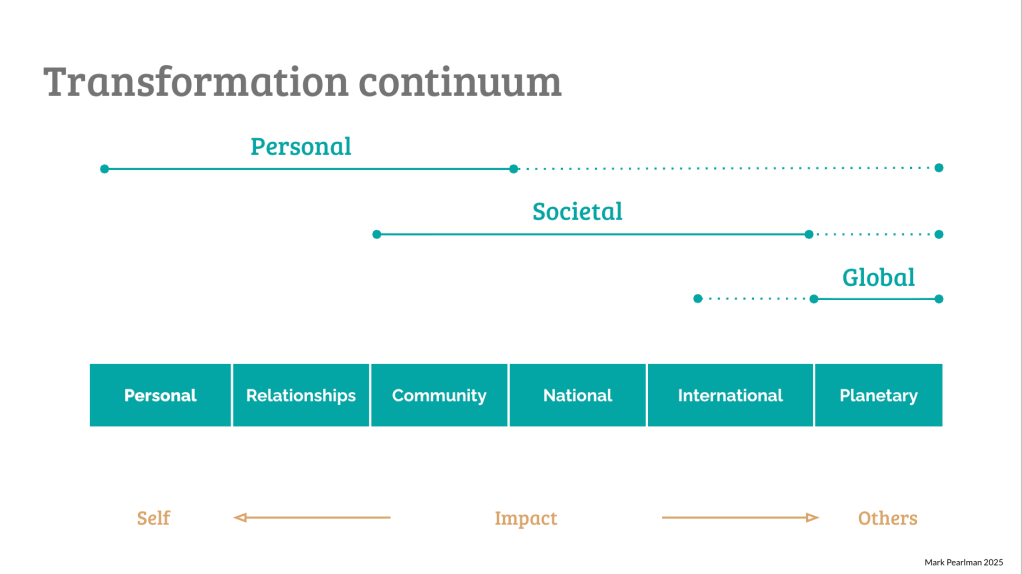
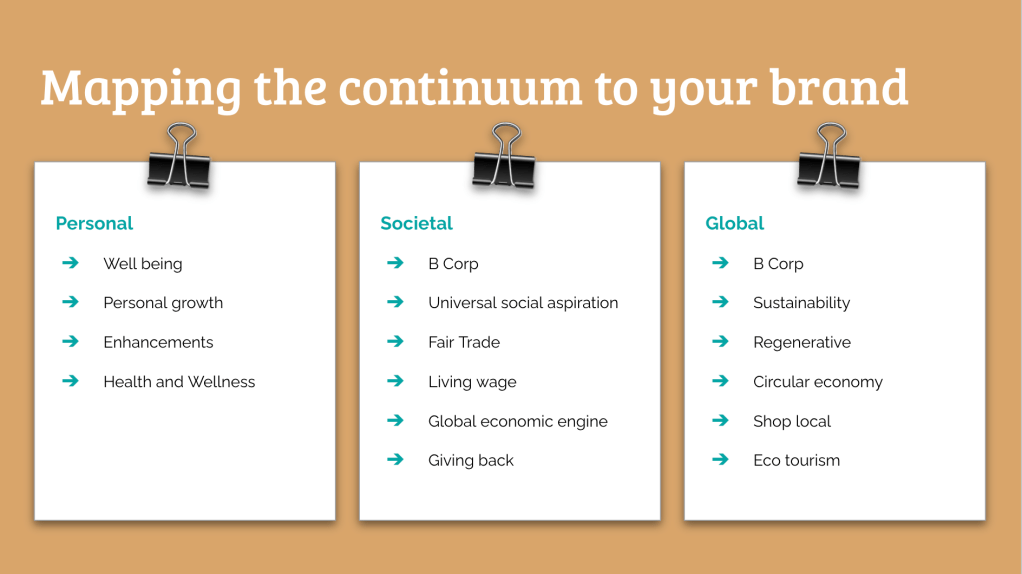
There are three levels of transformation that a brand can support:
- Personal (growth, well-being, health and wellness)
- Societal (giving back, living wage, fair trade)
- Global (sustainability, circular economy, shop local)
The Personal Transformation Aisle
At the personal level, transformation is about the self. Healing, belonging, calmness, caring, whatever “better” means to each of us. The mundane grocery store aisles, of all places, sit right in the middle of the three levels of transformation.
Every shelf can tell a story about doing better: wellness snacks, plant-based meals, vitamins, longevity supplements. Some food brands help customers connect the dots through supply chain transparency, education, and pre-made healthy options.
Think of it less as selling food and more as curating identity through gastronomical options. Offering these choices puts grocery store right in the health and wellness sweet spot, but mental well-being and personal growth, not so much.
And therein lies the catch: certain brands, products, and categories have transformational limits. A cereal box can’t promise enlightenment, and no smoothie alone delivers balance. Brands that risk overstating their influence can drift into transformation washing, greenwashing new cousin.
Thought starter: Step outside the grocery store and look at your brand. When developing a transformational brand strategy, how deeply can your brand and its promise lean into personal growth, health, wellness, and well-being? If you can’t directly support personal transformation, don’t worry and keep reading.
Societal Transformation: From Store to Community
Beyond the self, transformation happens in how we live together. Grocery stores, once hyper-local institutions, are finding renewed purpose in social impact.
Neighborhood programs, food equity initiatives, and locally sourced goods all connect commerce to community. When a supermarket chooses local farmers or partners with regenerative growers, it signals more than good taste, it’s having societal impact.
Some companies are taking that idea global. For example, Cargill’s regenerative agriculture initiative works with farmers across millions of acres to improve soil health and biodiversity. Others, like The Transfarmation Project, help producers transition from industrial farming to sustainable systems.
Transformation at the societal level isn’t about slogans, it’s about supporting consumers and their communities. Supporting a living wage locally and for their supplier’s employees makes their customers feel better about their purchases and themselves.
Thought starter: Again, beyond the context of the grocery store, any brand can support societal transformation. What can your brand do to attract and retain customers by doing good for their local communities and for the communities in your supply chain?
Global Transformation: Beyond the Shelf
Zoom out even further and transformation becomes universal. It’s the shift from extractive to regenerative, from transactional to circular.
Grocery chains are part of a massive global network that touches nearly every sustainability issue: agriculture, energy, waste, transportation, and labor. Their influence on what people eat and how food is produced puts them in a unique position of impact.
Organizations like Publicis Sapient and Omdena are exploring how data, design, and technology can power more sustainable systems. But again, transformation doesn’t mean perfection, it means progress with accountability. Volvo is a case in point. Last year they openly revised their all-electric target to 2030. In the Transformation economy, authenticity and transparency are fundamental principles. And just as consumers may stumble on their personal journeys, so will brands. They may not make the goal at first, but they’ll keep trying.
Thought starter: Stepping back from the grocery store one more time, any brand can support global transformation. The consumers’ goal of being a good steward for our planet helps them fulfill their desires. What can your brand do from a global perspective to support your customer’s desire to do no harm and leave no trace?
Guardrails Against Transformation Washing
Transformation is enthralling, it sounds bold, human, and hopeful. But it’s easy to get carried away. A few practical guardrails can keep purpose grounded in reality:
- Stay within your circle of influence. Focus on the transformations your brand can actually enable.
- Co-create with your customers. Transformation happens with them, not at them.
- Measure the impact. If you can’t show it, you probably shouldn’t say it.
- Lead with humility. No brand can transform the world overnight, but every little step counts.
Tools to Define a Brand’s Transformational Realm
As you take the leap into the Transformation Economy, how do you find your (checkout) lane? A few helpful frameworks can guide the process:
- The Transformation Map: Define the customer’s baseline, desired state, and your role in between.
- The Life Aspiration Model (by Christophe Jauquet, adapted from Seth Godin’s This is Marketing): Focus on deeper human goals, health, belonging, mastery, not just product use.
- The Brand Purpose Ladder: Build from functional → emotional → transformational benefits — and make sure each level is earned.
- Archetype Alignment Framework: Anchor your transformation role to your brand personality (The Hero, The Caregiver, The Creator, etc.).
The Checkout Lane: Finding Meaning Amid the Noise
Maybe we’re all still a little lost in the supermarket, searching for that “special offer,” that “guaranteed personality.”
But brands have a unique chance to meet their customers there, in the aisles of aspiration and identity, and offer something more than consumption: clarity, connection, and a small but meaningful step toward who they want to become.
The Transformation Economy isn’t about saving the world.
It’s about knowing where your brand can help make it, and consumers’ lives, a little bit better. One customer, one shelf, one story, one choice at a time.
Sources
- https://www.omdena.com/blog/top-companies-and-organizations-leading-sustainable-agriculture
- https://www.publicissapient.com/insights/circular-economy-and-agricultural-transformation
- https://thetransfarmationproject.org
- https://makershub.ai/discover/blog/the-transformation-economy-and-the-future-of-accounting-from-services-to-strategic-value
- https://theexperiencestrategist.substack.com/p/in-praise-of-joe-pines-new-book-on
- https://transformationsbook.substack.com/p/levels-of-experiences-part-one
- https://www.forbes.com/sites/afdhelaziz/2024/07/02/the-future-of-work-how-employee-transformation-is-the-next-frontier-in-employee-engagement
- https://strategichorizons.com/the-transformation-economy-and-you/
- https://meetings.skift.com/2024/01/08/the-experience-economy/
- https://blooloop.com/brands-ip/in-depth/joe-pine-experience-economy/
- https://www.researchgate.net/publication/260917972_The_experience_economy_past_present_and_future
- https://www.futurelearn.com/info/courses/luxury-industry-customers-experiences/0/steps/308250
- https://www.resonanceglobal.com/blog/companies-supporting-regenerative-farming-practices
- https://qz.com/1753892/the-transformation-economy-is-the-new-experience-economy
- https://www.agriculturedive.com/news/oped-brand-sustainability-agriculture-climate/716914/
- https://worldxo.org/transformation-trailblazers-with-joe-pine/
- https://tracextech.com/sustainable-agriculture/
- https://www.omdena.com/blog/top-companies-transforming-regenerative-farming
 Experiential Ideas
Leave a comment