AI Approach:
Human/AI Collaboration
When a creative director guides a junior designer, the clarity of the process and the clarity of the goal determine the quality of the work. AI is no different. If you can’t break your workflow into understandable steps and articulate what “good” looks like, you can’t expect AI to contribute meaningfully.
The more precisely you define the stages of your process, the more accurately AI can step in as a true creative partner—supporting, accelerating, and elevating the work rather than guessing at your intent.
AI isn’t a shortcut to creativity, it’s a collaborator that only becomes powerful when you understand your own process. If you can break your workflow into clear steps, articulate what each one requires, and define the constraints that shape good outcomes,
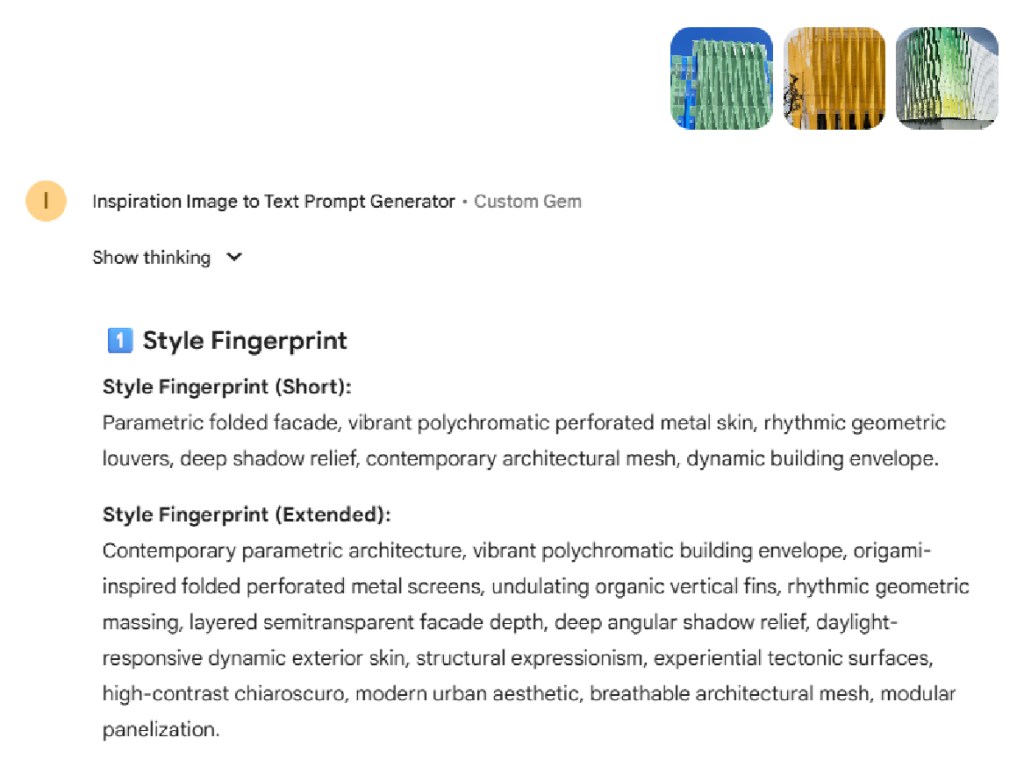
AI can become an extraordinary design partner. Like any tool—SketchUp, Adobe, a pencil—its output is only as strong as the clarity of your intent. When you know the end state you’re aiming for, the inputs required to get there, and which models are best suited for each task, AI can accelerate specific stages of the creative journey without replacing the craft itself.
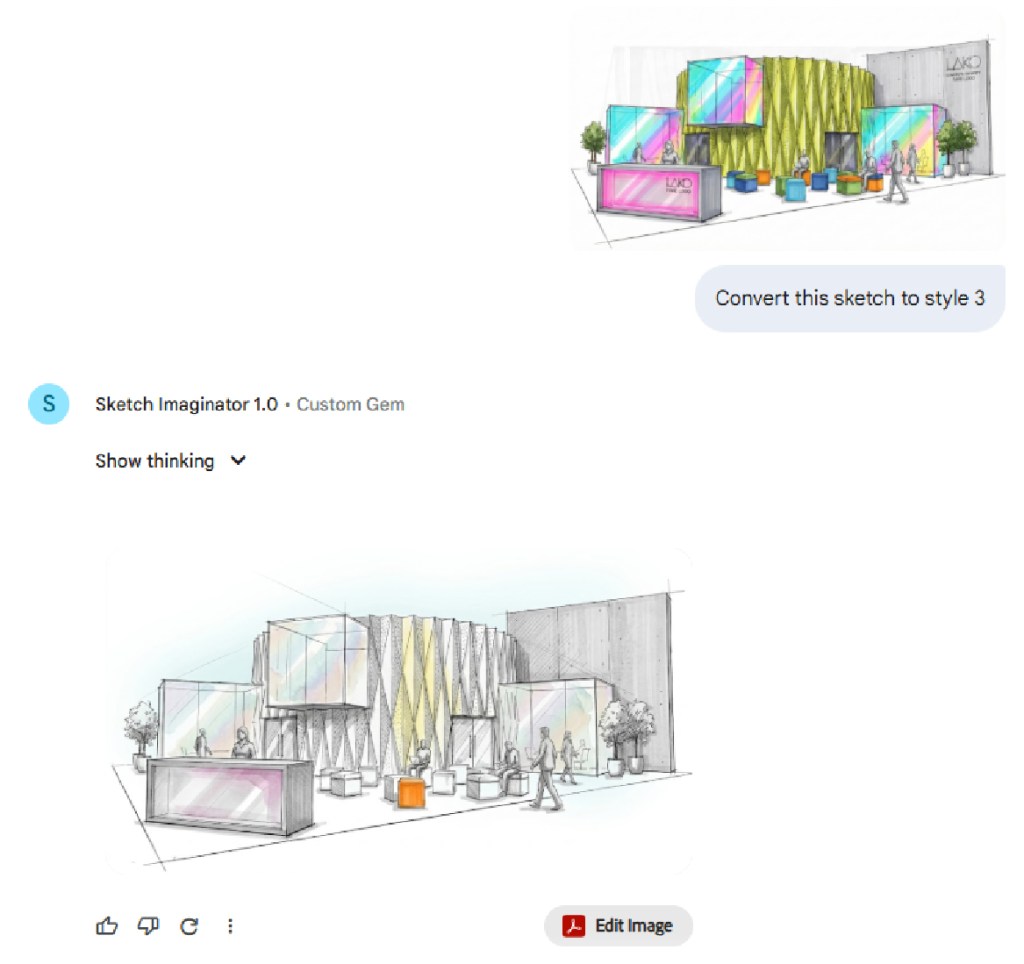
My own agents went through multiple iterations before they became consistent and valuable, and they rely on my ability to understand my process and each LLMs capabilities to become a stable part of my workflow. Prompting and agent development are learned skills. Just like sketching, you need to practice a lot to become proficient.
When you treat AI as part of the toolbox that helps with your disciplined creative process, it becomes a force multiplier rather than a gimmick.
 Experiential Ideas